
You've seen aerial photos before. But some drone shots capture things nobody was supposed to see — hidden rooftops, lurking sharks, even evidence that cracked a criminal case. We're breaking down the most jaw-dropping examples and what they reveal about the world just above your head. Some of these will genuinely change how you look at your own neighborhood.
Why Drone Photos Feel So Different
You've seen drone photos before — maybe a beach from straight above, a cityscape at golden hour, a winding river cutting through farmland. They stopped your scroll. Something about them felt different, almost unsettling, and you probably couldn't pinpoint why. Here's the thing: your brain has spent your entire life processing the world from roughly five and a half feet off the ground. That's your default. Every memory, every mental map, every sense of scale you've ever built is locked to that single altitude.
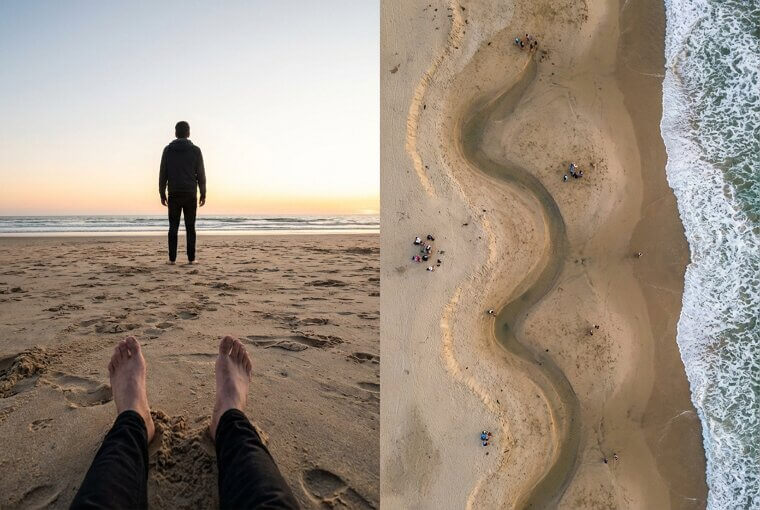
When a drone lifts the camera to 200 feet, it doesn't just show you more — it reorganizes everything you thought you understood about a place. Familiar spaces become abstract. Hidden patterns emerge. And sometimes, the camera captures something nobody was ever supposed to see.
The Angle Your Eyes Never Get
Think about it — you've navigated the world from the same height since you were a teenager. Every parking lot you've crossed, every pool you've swum in, every intersection you've waited at — all experienced from that narrow horizontal band roughly five to six feet above the pavement. Your brain literally has no framework for processing those same spaces from directly overhead. That's why a straight-down drone shot of something completely mundane can feel so strange and captivating.
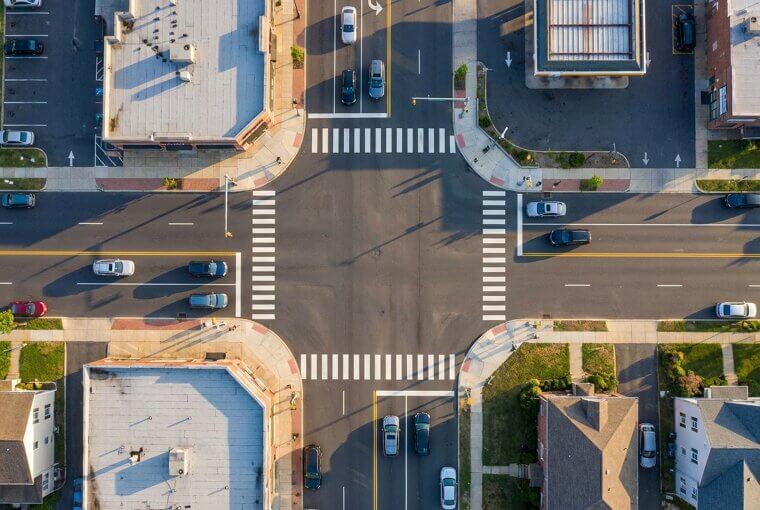
A swimming pool becomes a glowing turquoise rectangle floating in gray. A parking lot transforms into an oddly beautiful grid of color and geometry. Your brain treats these images as new environments because, from that angle, they essentially are. And sometimes, that unfamiliar perspective reveals something genuinely alarming — like what's swimming just a few feet from shore.
A Sunbather Had No Idea
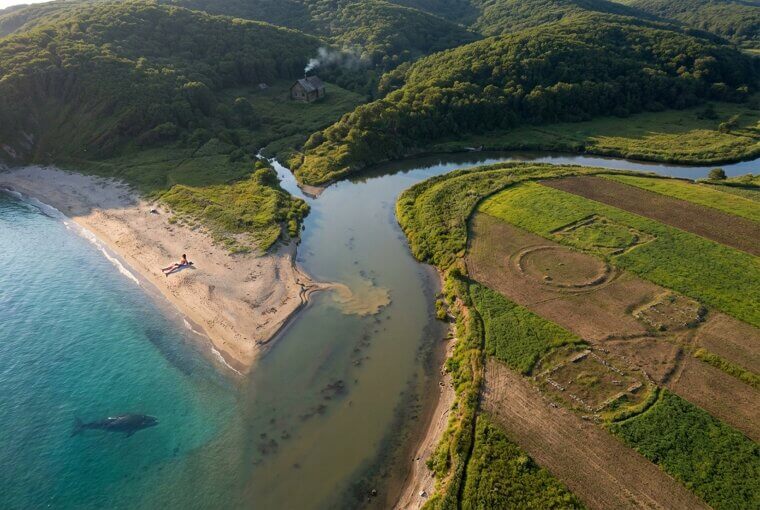
You've probably seen this exact photo — or one just like it. A sunbather stretched out on a towel, completely relaxed, maybe ten feet from the waterline. And there, just beyond the shallow break, a dark shape gliding through crystal-clear water. A shark. Sometimes a massive ray. Close enough that you could almost draw a line between the person's toes and the animal's shadow.
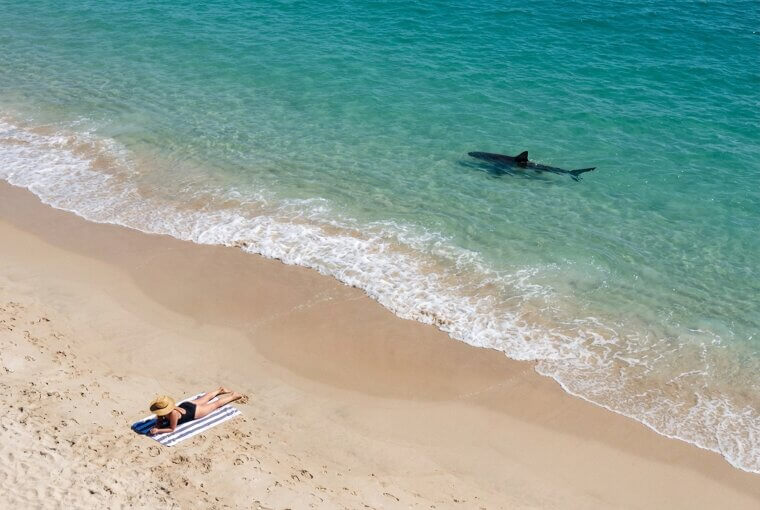
The sunbather never knew. Without that drone overhead, they would've packed up, driven home, and never learned what was swimming alongside them. It's a perfect example of something that was always there, just hidden below the surface. And it turns out, that idea doesn't just apply to oceans — it applies to rooftops too.
Rooftops Hide Surprising Secrets
Here's something drone photographers stumble onto constantly: rooftops are weird. Fly a camera over any dense city and you'll find secret gardens bursting with vegetables, abandoned couches bleaching in the sun, graffiti messages clearly written for satellites — and nobody at street level has any idea. Some discoveries are stranger. Inspectors in multiple cities have found illegally installed rooftop swimming pools hidden behind parapets, completely invisible from the sidewalk below.
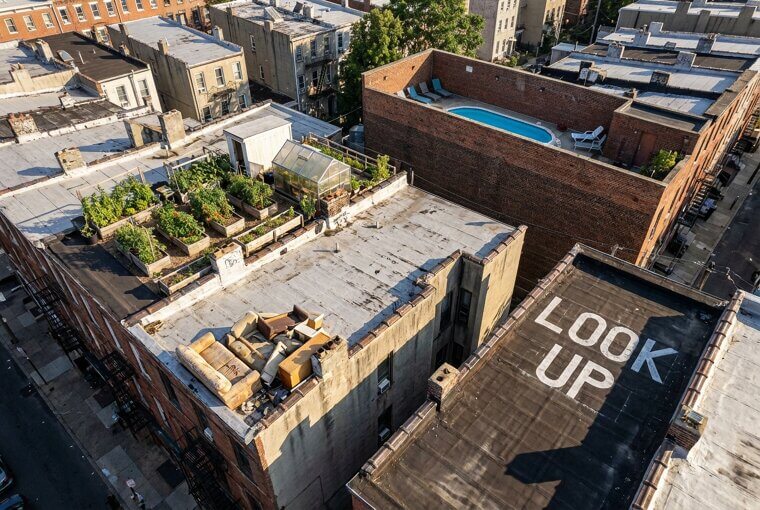
People treat rooftops like private worlds because, until recently, nobody was looking down. Drones changed that overnight. And in one European city, a single rooftop discovery sparked an actual news investigation.
The Pool Nobody Knew Existed
In 2014, a drone hobbyist flying over a historic district in Seville, Spain, captured footage of something odd — a full-sized swimming pool tucked behind the ornate facade of a centuries-old building. From the street, the structure looked untouched. From above, it told a completely different story. The footage went viral locally, and journalists started digging. It turned out the property owner had constructed the pool without any permits, violating strict heritage preservation codes.

City inspectors confirmed they'd never have found it without the aerial footage. One casual flight accidentally became an enforcement tool. It makes you wonder — if a hidden pool can go unnoticed for years, what's happening on the land beneath our feet that we're missing entirely?
What Farmers See Changes Everything
Here's something you can actually try this weekend. Hobby farmers and gardeners are flying inexpensive drones over their land and spotting problems that are genuinely invisible from ground level — patchy irrigation coverage, early pest damage spreading in telltale rings, and drainage failures you'd never notice walking between rows. The most useful trick is dead simple: fly over your garden right after a heavy rain. From above, you'll instantly see where water pools and where it runs off too fast, revealing compacted soil that needs attention.
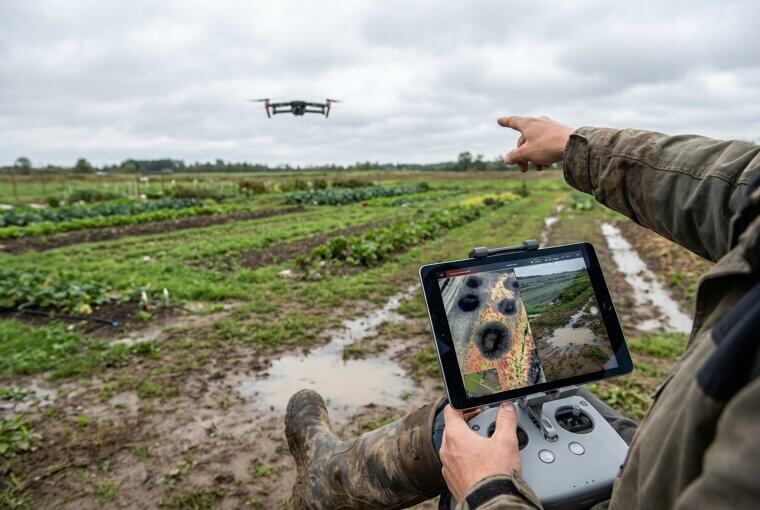
Even a basic $200 drone gives you this bird's-eye diagnostic. No agronomy degree required — the patterns practically announce themselves. But practical gardening insights are just the beginning of what altitude reveals. Some patterns hidden at ground level have been waiting thousands of years to be seen.
This Shape Only Appears From Above
Everyone knows the Nazca Lines — massive ancient figures etched into the Peruvian desert, completely meaningless at ground level, breathtaking from above. But here's what's astonishing: we're still finding new ones. In the last five years, researchers armed with ordinary consumer drones have discovered previously unknown geoglyphs and ancient earthworks hidden beneath Amazon rainforest canopy and scattered across the deserts of Saudi Arabia and Jordan. Some of these structures are larger than football fields, built by civilizations that vanished centuries ago.
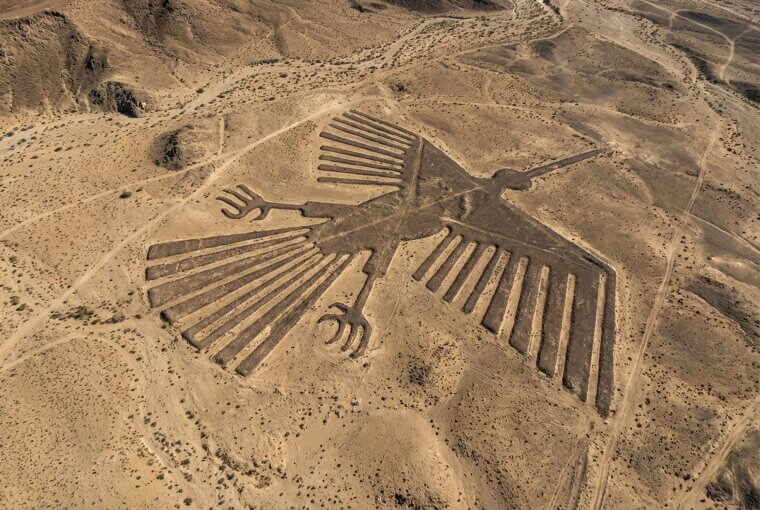
They were always there. Thousands of people walked over them, farmed on them, built houses on top of them — and nobody knew. It took a $300 drone hovering at 200 feet to reveal what millennia had buried. Archaeologists are now using this exact approach as a core part of their fieldwork.
Archaeologists' Favorite New Tool
Here's the technique professionals actually use. Archaeologists call them "crop marks" — and once you understand the concept, you'll never look at a farm field the same way. Buried stone walls and ancient foundations affect how moisture reaches plant roots. Crops growing over buried walls get less water, so they're shorter and paler. Crops over old ditches get more water, growing taller and darker green. From the ground, the difference is invisible. From a drone at 300 feet, those subtle color variations draw a precise map of structures nobody has seen in centuries.
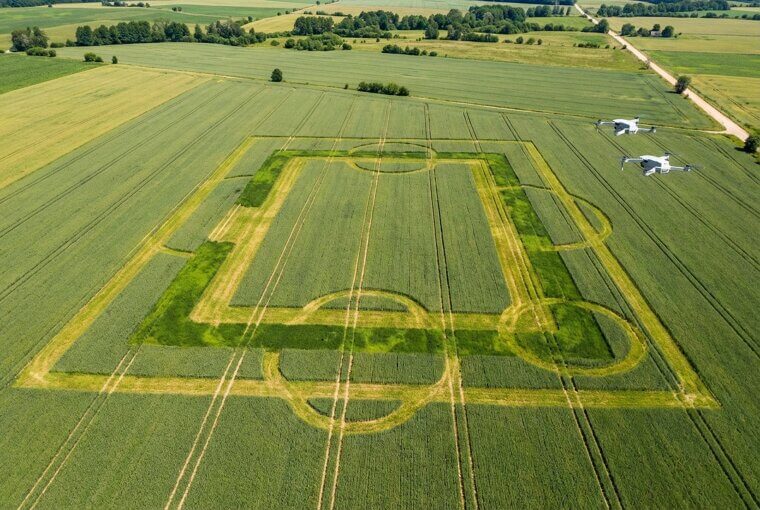
This isn't experimental technology — it's now standard field methodology. Survey teams routinely schedule drone flights in late summer when crop stress makes buried features most visible. Every ordinary green field potentially holds a blueprint of something forgotten underneath. And you don't need to be an archaeologist to start looking.
Your Neighborhood Hides Old Foundations
Here's something you can do right now, no drone required. Open Google Earth on your phone, type in your address, and zoom in on your neighborhood. Switch to satellite view and look at lawns carefully. In many suburban areas built over old farmland or demolished structures, you'll spot faint rectangular discolorations in the grass — darker green lines tracing foundations that were demolished decades ago. Late summer imagery works best, when drought stress makes these ghosts most visible.
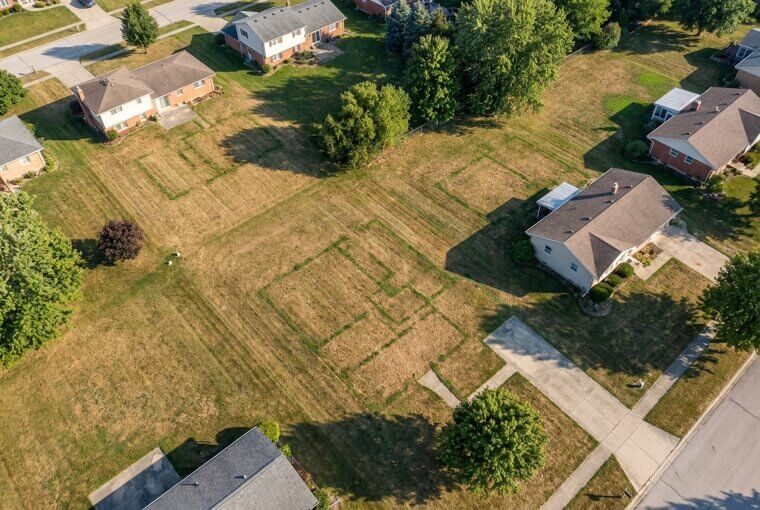
Pay special attention to yards near old town centers or along historic roads. Those subtle outlines are real structures whispering through the soil. You might be surprised what's sleeping under your street. But not everything drones reveal is ancient history — sometimes they accidentally capture something happening right now.
The Traffic Jam That Solved a Crime
A real estate photographer in Arkansas was filming a property listing when his drone captured something unplanned — a silver sedan speeding through a red light three blocks away, moments after striking a pedestrian. The driver kept going. Nobody on the ground caught the plate number. But the drone footage, shot in 4K from 250 feet up, captured the license plate clearly enough for police to identify the vehicle within hours. The driver was arrested the next day.
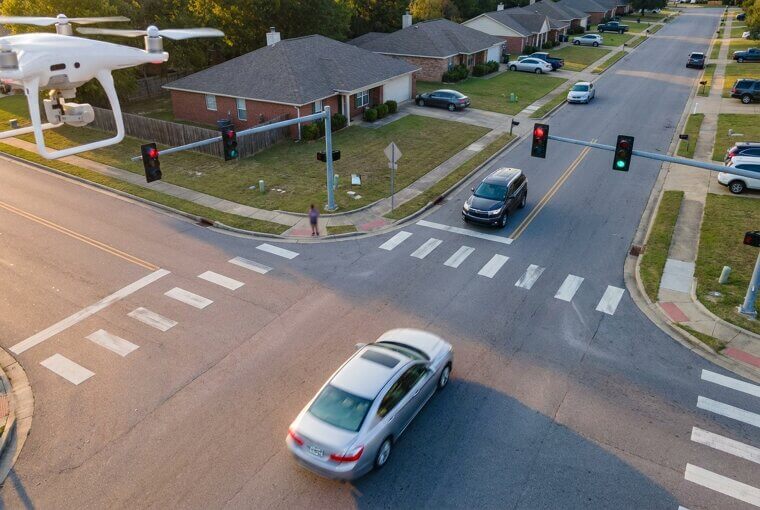
The photographer had no idea what he'd recorded until police canvassed the area and asked about cameras. Drones are becoming accidental witnesses to events unfolding beyond what any bystander can see. And it's not just crime — they're quietly documenting wildlife behavior that even researchers never expected to catch.
Wildlife Caught Completely Off Guard
Marine biologists were stunned when a drone off the coast of Argentina captured something never filmed before — a southern right whale mother rolling onto her side to nurse her calf at the surface, a behavior researchers had only theorized about. In Florida, a hobbyist's footage revealed over 300 alligators congregating in a single remote swamp clearing, the largest gathering ever documented. In Tennessee, a real estate drone caught a black bear family splashing joyfully in a homeowner's pool while the owners were at work.
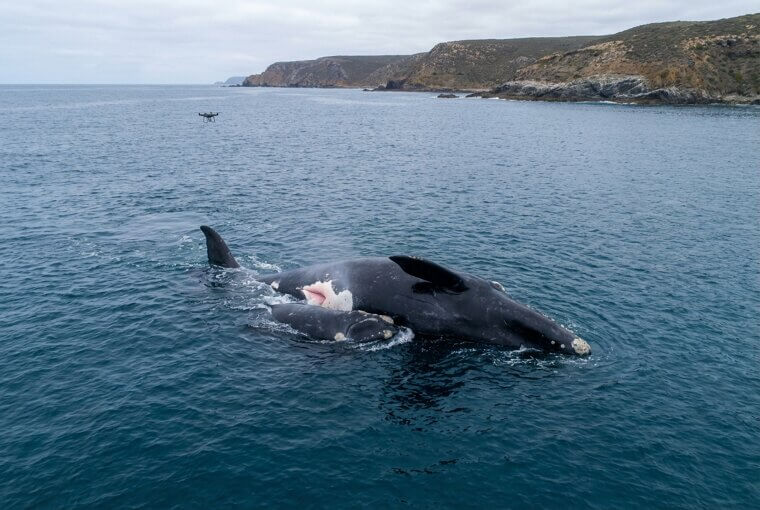
The key is that animals don't recognize drone buzzing as human presence. They behave as if nobody's watching — which means we're finally seeing their unguarded lives. Remember that shark gliding beneath the sunbather? Entire animal worlds have always been hidden just below the surface. But watching from above raises an uncomfortable question: when does observation start causing harm?
How Close Is Too Close to Animals
Those incredible wildlife moments come with a serious cost. When drones fly too close, nesting birds abandon their eggs permanently. Studies show mother dolphins alter their breathing and diving patterns for hours after a single drone encounter, exhausting calves struggling to keep up. In U.S. national parks, flying a drone near wildlife is a federal offense carrying fines up to $5,000. Several pilots have been prosecuted after posting their own footage online — the GPS metadata in their videos became the evidence against them.
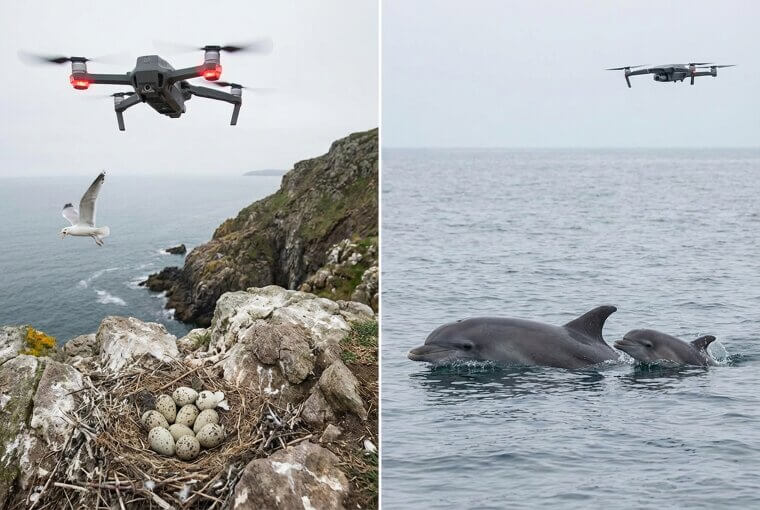
If you're tempted to capture your own stunning animal encounter, know that the line between admiration and harassment is measured in altitude and distance. The animals you're marveling at may be paying a price you can't see from your screen. And wildlife isn't the only thing drones are catching people trying to hide.
One Photo Exposed Illegal Dumping
In Oregon, a hobbyist filming autumn foliage noticed strange discoloration in a creek below — bright orange chemical runoff traced back to an auto shop illegally dumping solvents. In New Jersey, a photographer captured construction crews pushing demolition debris into protected wetlands at dawn, before inspectors arrived. Both cases led to six-figure fines and forced cleanups after the drone images reached environmental agencies.
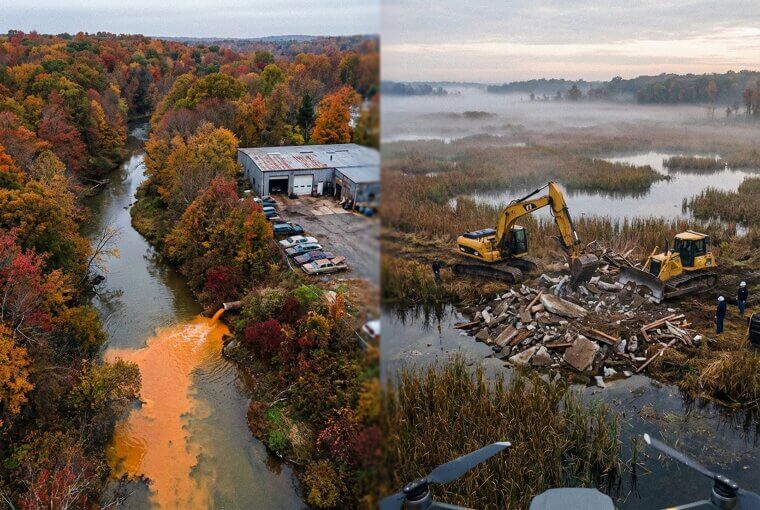
These weren't investigative journalists or government officials. They were ordinary people with $300 drones who happened to press record at the right moment. Think about the waterways and wooded areas near your own home — would you recognize what's wrong if you saw it from above? Turns out, there's a visual language to reading water that experts already know.
Your Property Line Might Be Wrong
Here's something worth checking this weekend: drone and satellite images routinely show that fences, sheds, and driveways sit feet — sometimes yards — away from actual property boundaries. Neighbors have built on each other's land for decades without knowing. When disputes escalate, homeowners who compared aerial imagery with official survey maps had powerful visual evidence on their side.
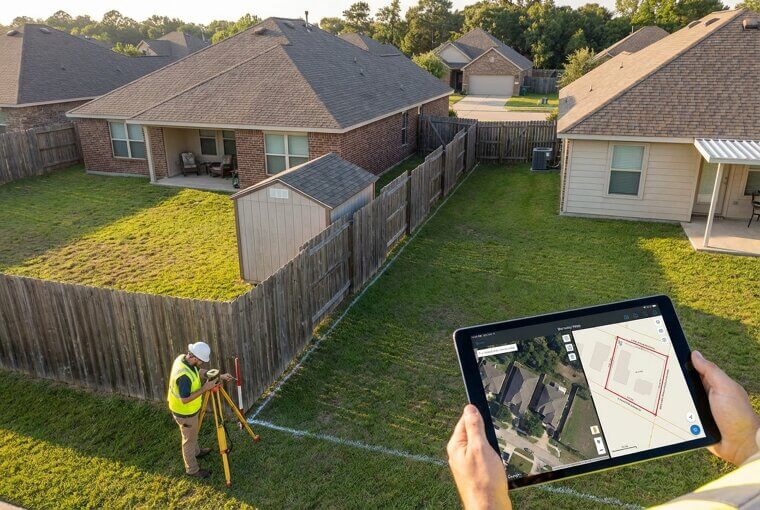
Try this yourself. Visit your county assessor's website and pull up your property's plat map. Then open Google Earth and overlay what you see. If your fence doesn't match the legal boundary, you'll want to know before your neighbor does. But property lines aren't the only thing aerial views decode — water tells its own secrets.
The Color of Water Tells a Story
Environmental scientists can read water like a book from drone altitude. That bright green swirl in a lake? Algal bloom — potentially toxic to pets and children who wade in. Brown plumes fanning from a riverbank reveal sediment runoff, often from nearby construction eroding unprotected soil. Unusually dark patches might signal sudden depth changes, submerged vehicles, or waterlogged debris fields that official maps don't show.
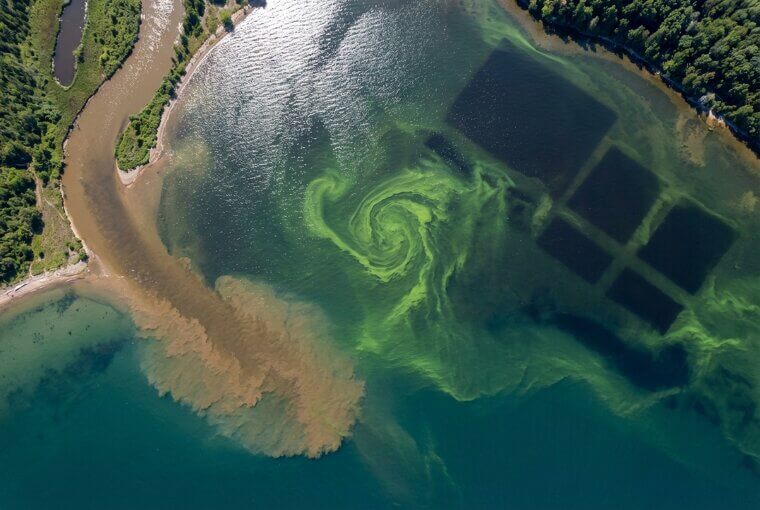
Next time you see an aerial water photo, look at color transitions — every shift tells you something about what's entering that water or lurking beneath it. This visual literacy matters more than you'd guess. Sometimes reading water from above doesn't just inform — it saves a life.
Rescuers Found Him in 20 Minutes
In 2023, an 82-year-old man with dementia wandered off a trail in a Virginia state forest. His family called 911 at dusk. A ground search team would have faced hours of combing through dense underbrush in fading light — terrain where a disoriented man could sit quietly, invisible to searchers walking ten feet away. Instead, a volunteer drone unit launched a thermal-equipped quadcopter. Twenty minutes later, they spotted a bright human heat signature curled beneath a thicket of mountain laurel.
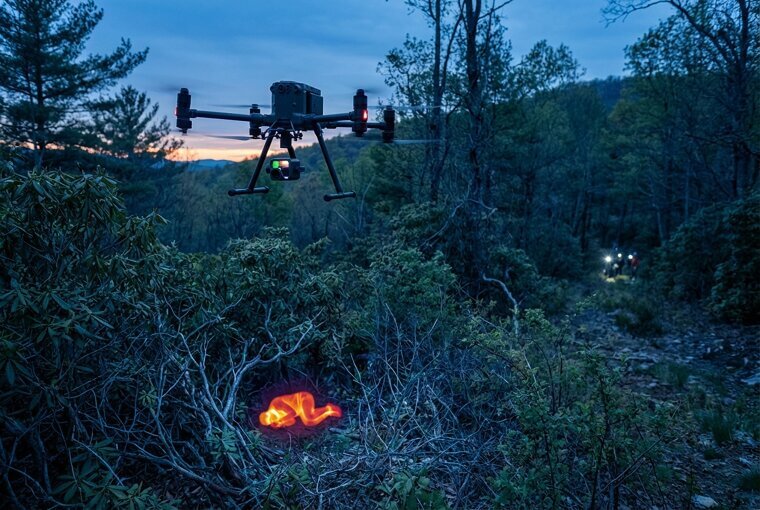
He was hypothermic but alive. Imagine that phone call — your father, your grandfather, found and breathing because a camera saw his warmth through the branches. Stories like this are becoming common, and they raise a question worth understanding: how exactly does a thermal camera see what human eyes completely miss?
Thermal Cameras See Through Darkness
Thermal cameras don't detect light — they detect heat radiation. Every object above absolute zero emits infrared energy, and thermal-equipped drones translate those invisible emissions into vivid color maps. A human body glows bright against cool forest ground. A leaking hot water pipe beneath a sidewalk appears as a warm streak invisible to anyone walking over it. Electrical faults in building panels show as dangerous hot spots before they become fires.
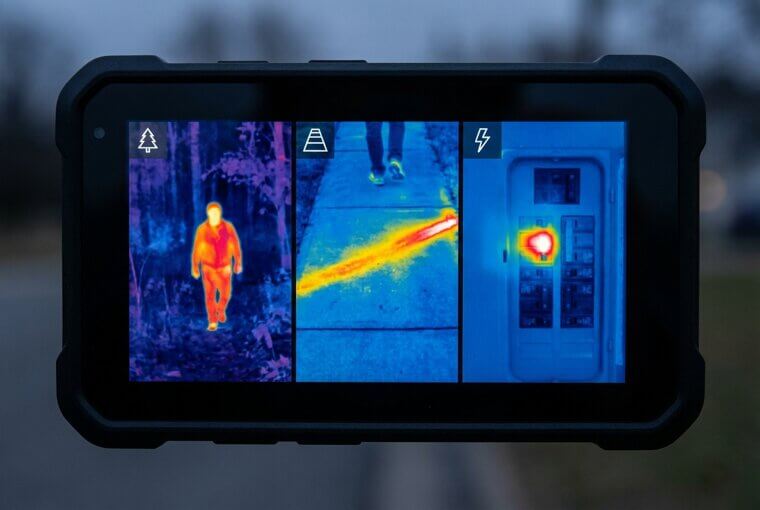
Here's the insider detail: home inspectors increasingly use thermal drones to scan rooftops and walls for insulation gaps and hidden moisture damage — problems that would otherwise stay buried until they cause thousands in repairs. And speaking of rooftops, there's a simpler drone trick that could save you real money.
A Roof Inspection Without a Ladder
Next time you need a roof inspection, ask one simple question: do you use a drone? Many roofing companies and home inspectors now fly a quick aerial survey instead of sending someone up a ladder. It's faster, safer, and often fifty to a hundred dollars cheaper. From above, missing shingles, cracked flashing, and clogged gutters show up with startling clarity — no one risks a fall, and you get timestamped photo documentation of every square foot.
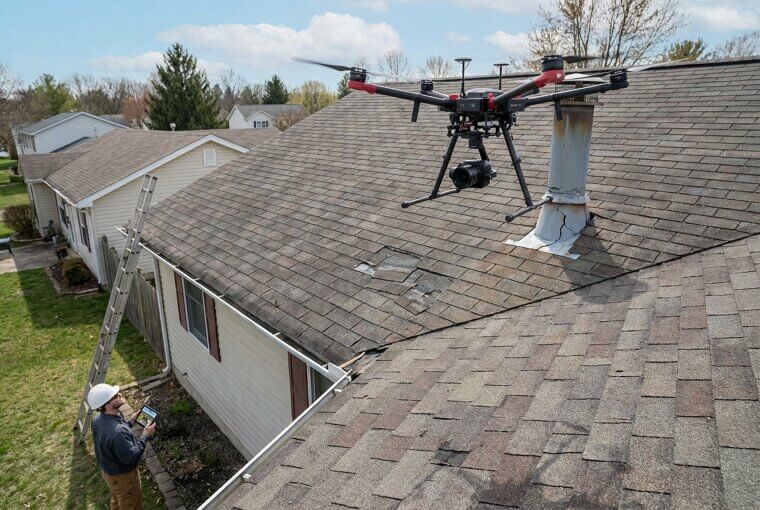
Here's a detail worth knowing: some insurance companies now accept drone photos as supporting evidence for roof damage claims. Ask your insurer before your next policy renewal. That simple conversation could matter a lot more than you'd expect — especially after a major storm rolls through.
The Hurricane Damage You Can't See Below
After Hurricane Ian hit Florida in 2022, drone surveys revealed something gut-wrenching: entire neighborhoods where nearly every roof had damage — cracked tiles, lifted shingles, punctured membranes — yet from street level, most homes looked perfectly fine. Homeowners had no idea they were exposed. Within weeks, rainwater seeped into attics. Within months, mold spread through walls. Here's where it gets financially devastating: most homeowners insurance policies require damage claims to be filed within a strict window, sometimes as short as one year.
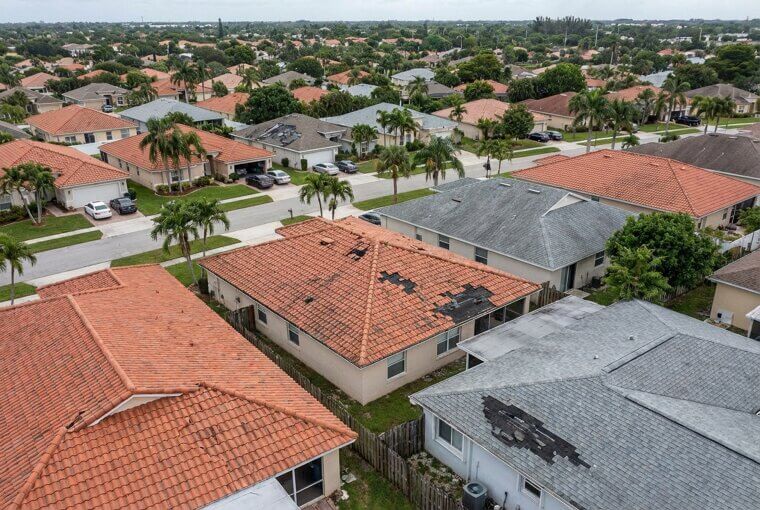
Thousands of families discovered their damage too late and had claims denied outright. If you live anywhere storms hit, a post-storm drone inspection isn't optional — it's financial protection. And those insurers processing your claims? They're flying their own drones too, for reasons that might surprise you.
Crowds Look Different From the Sky
When you're standing inside a crowd of fifty thousand people, it feels like chaos. From a drone, something stunning emerges: order. Aerial photos of music festivals reveal that massive crowds naturally organize into honeycomb-like clusters with narrow lanes flowing between them. Sporting events show density gradients — tight compression near entrances that loosens in predictable waves. These patterns are invisible to anyone on the ground, but event planners and safety officials study them obsessively.
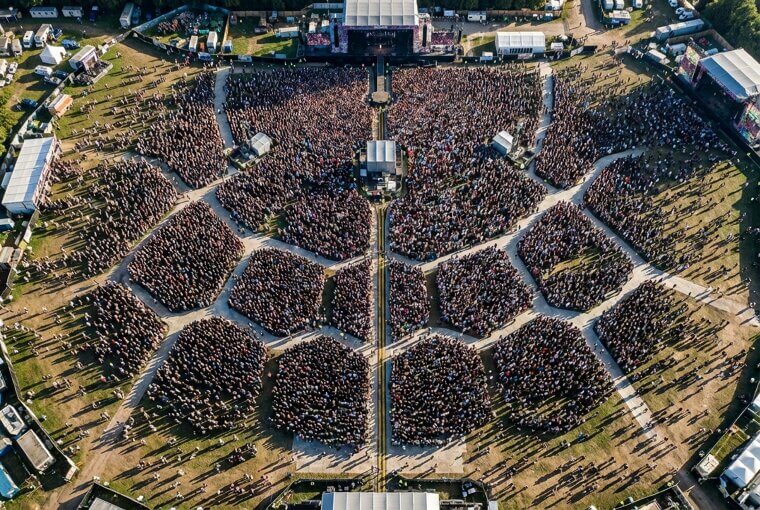
They're looking for one thing: crush-risk zones where density exceeds six people per square meter and movement becomes impossible. Those beautiful drone patterns are literally life-or-death data. Next time you're in a huge crowd, remember — the shape of the danger is only visible from above. And sometimes what drones reveal reshapes something far bigger than a single event — like an entire coastline.
The Photo That Changed a Coastline Map
A recreational drone pilot in North Carolina was simply photographing scenic cliffs when he noticed something alarming: the shoreline sat roughly forty feet inland from where official NOAA maps showed it. Decades of erosion had quietly swallowed land that government records still claimed existed. When he shared his geo-tagged images with state coastal management, they launched an emergency survey — confirming the discrepancy and updating official maps for the first time in years.
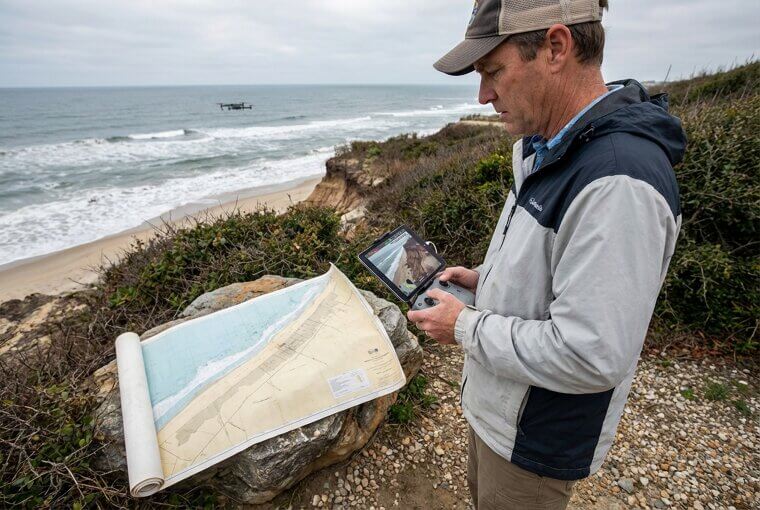
Remember the water-color patterns from earlier? Water and land exist in constant negotiation, and official records almost always lag behind the reality a drone can capture in seconds. Now imagine who else is flying overhead, studying your property — not out of curiosity, but for profit.
Why Insurance Companies Now Fly Drones
State Farm, Allstate, and other major insurers now operate drone fleets numbering in the thousands. After writing your policy, they may fly over your property to verify what you disclosed — and catch what you didn't. That backyard trampoline you never mentioned? It's a liability risk that could void your coverage. An unpermitted deck extension? That changes your home's replacement cost calculation. Insurers cross-reference drone imagery with your application, and discrepancies can trigger premium increases, policy cancellations, or fraud investigations.
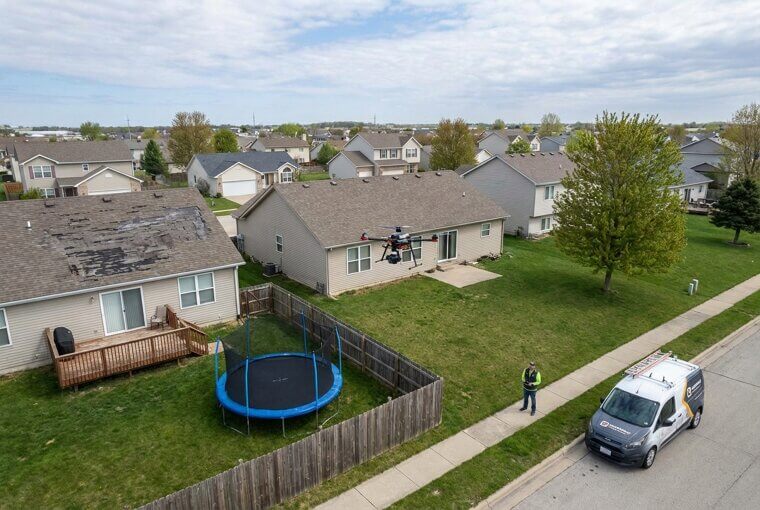
This often happens without any notification to you. In most states, insurers aren't legally required to tell you they've conducted an aerial assessment. Your property is being evaluated from above right now by companies with a financial interest in every detail they find. The good news? You can use this same visibility to protect yourself — if you know how.
What Your Home Looks Like to Insurers
Here's your move. Open Google Earth right now, type in your address, and zoom in on your roof. That's roughly what your insurer sees. Notice a blue tarp still covering last year's storm patch? A dead tree leaning toward the house? Overgrown vegetation swallowing a fence? Fix those visible red flags before your next renewal or claim. You can also call your insurer directly and request any aerial imagery records they've used in underwriting your policy — you have the right to ask what data informed your premium.
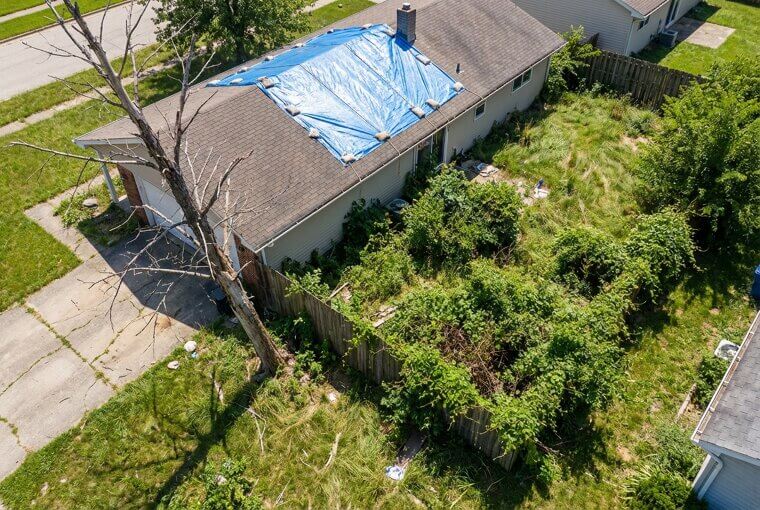
While you're at it, check for that old trampoline frame or the shed you forgot to disclose. Proactively updating your insurer costs far less than a surprise cancellation. Think of it as seeing yourself the way they see you. But insurers aren't the only ones using drones to uncover uncomfortable truths — ordinary citizens are pointing cameras at something far more alarming.
Pollution Patterns Nobody Could Prove Before
For years, communities living near coal ash ponds and chemical plants suspected they were being poisoned but couldn't prove it. Ground-level photos showed nothing conclusive. Now, armed with consumer drones, local activists and investigative journalists are capturing undeniable evidence — bright toxic plumes snaking from factory outflow pipes into rivers, pesticide drift clouds settling over schoolyards, waste lagoons leaking into groundwater channels. Remember the illegal dumping exposed in a single flyover? Multiply that by hundreds of cases nationwide. And recall how water color reveals contamination — green for algae, brown for sediment?
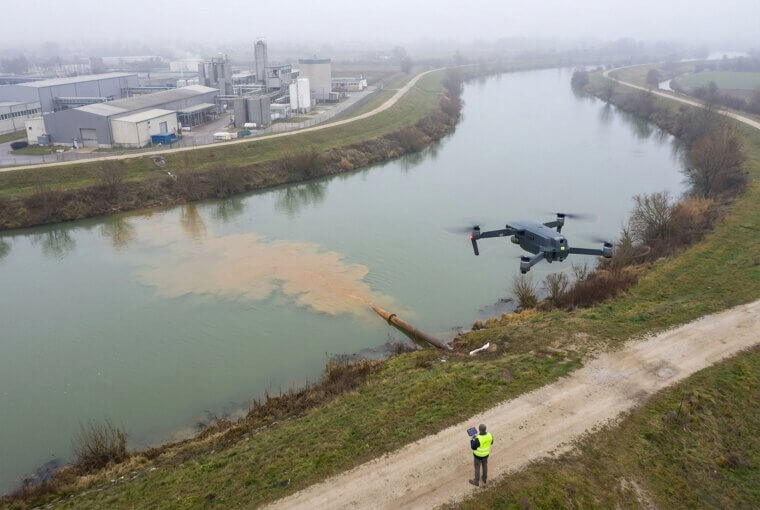
Communities are learning that visual literacy — and applying it in courtrooms. Several EPA enforcement actions in recent years began not with government inspectors but with a neighbor's drone footage. The proof was always flowing in plain sight — it just needed a witness at two hundred feet. Sometimes, though, the most powerful drone stories aren't about evidence. They're about unexpected people finding unexpected purpose.
A Grandmother Learned to Fly One
Margaret Hoffman was sixty-seven, recently widowed, and looking for something to fill the quiet. Her grandson left a small drone at her Kansas farmhouse after Thanksgiving. She taught herself to fly it over frozen wheat fields that January, and something clicked. She started photographing her rural county from above — every season, every light. Her camera found forgotten pioneer cemeteries hidden in overgrown pastures, the crumbling foundations of farmsteads where families once raised children, and the slow seasonal transformation of land her neighbors had stopped really seeing.
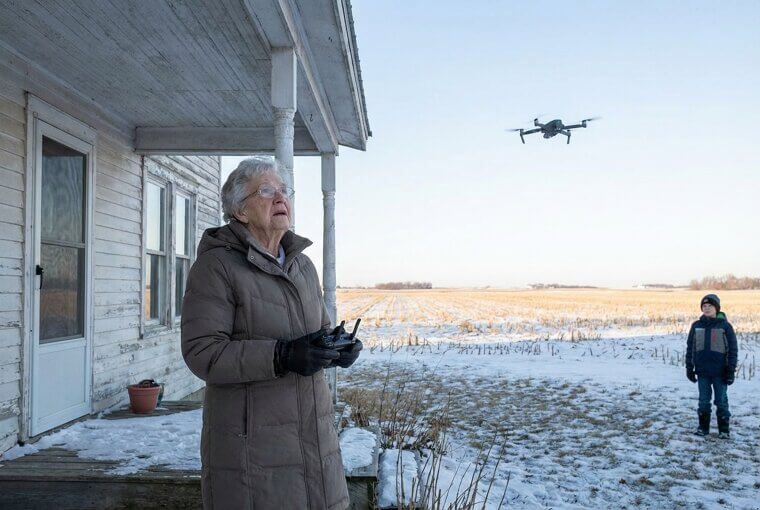
Margaret's photos became the county historical society's most requested archive. She'd preserved a world that was disappearing. If you're thinking this hobby isn't for someone like you — she thought that too. And the barrier to entry might be lower than you'd guess.
Beginner Drones Cost Less Than You Think
Here's what might surprise you: a capable camera drone with GPS stabilization, automatic return-to-home, and solid 1080p video starts around $200 to $300. Models in the sub-250-gram category — think compact, foldable units with surprisingly sharp cameras — are the sweet spot for beginners. Why 250 grams? Because in the United States, recreational drones under that weight don't require FAA registration or a pilot's license. You literally charge it, download an app, and fly. Look for entry-level models with gimbal-stabilized cameras and GPS hold rather than toy-grade drones without positioning systems.
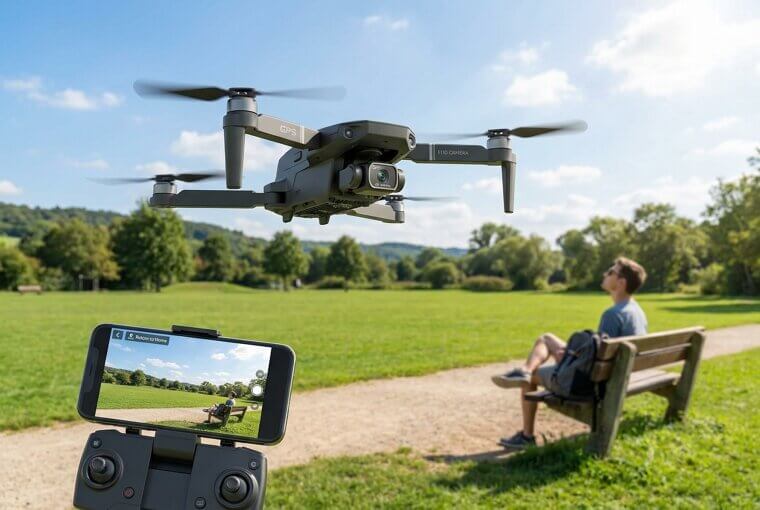
The difference between a $50 toy and a $250 capable flyer is staggering — smooth footage, reliable hover, and the confidence that it won't drift into a tree. Margaret started with exactly this kind of setup. But before you take off, there are three simple rules that'll keep you legal, safe, and out of trouble.
Three Rules Before Your First Flight
You don't need to memorize regulations — just three rules. First, stay below 400 feet and never fly within five miles of an airport. Second, always keep your drone within your line of sight — if you can't see it, bring it home. Third, never fly directly over people who haven't given consent. That's it. Those three guidelines cover the vast majority of what keeps recreational flights safe and legal. Download the free FAA B4UFLY app before your first session — it instantly shows whether your location is clear for takeoff.
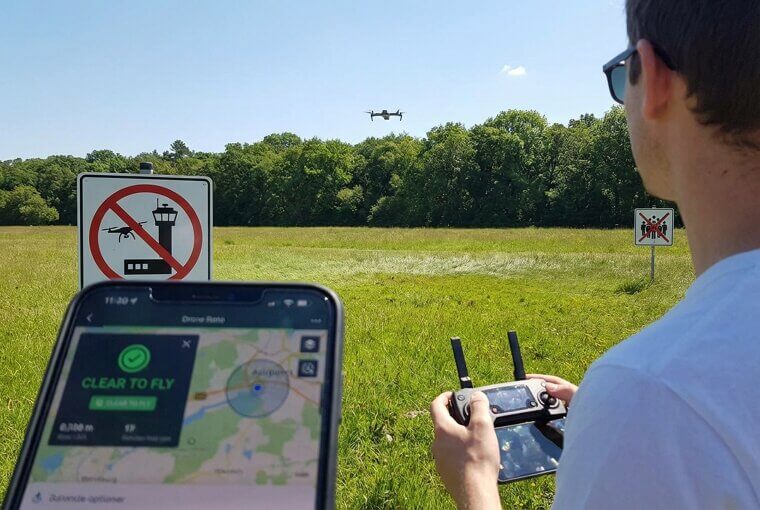
Green means go, red means find another spot. With the right gear and these basics memorized, you're genuinely ready. And sometimes a single flight produces something you never expected — like the photo that helped one family find a piece of their history they thought was lost forever.
The Photo That Reunited a Family
A drone hobbyist in rural Tennessee posted aerial footage of rolling hills and forgotten hollows on YouTube — just scenery, nothing remarkable. Three months later, a woman in Oregon commented through tears. She recognized the stone chimney and creek bend from her late mother's stories. Her family had left that homestead during the Depression. She'd spent two years searching county records, finding nothing. The footage gave her exact coordinates. She drove nineteen hours to stand on the land where her grandmother had been born.
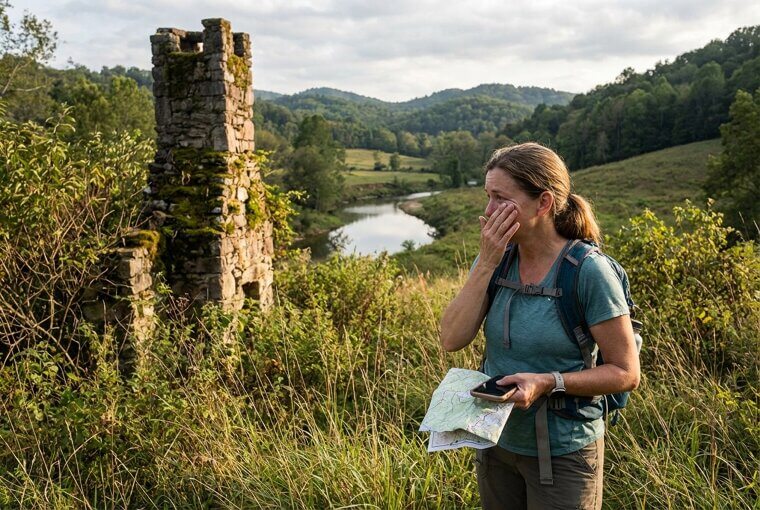
She found the foundation stones, a collapsed root cellar, and a rusted iron gate her mother had described holding as a child. Sometimes a photograph doesn't just show you something new — it gives you back something you lost. And that same power of perspective is waiting right outside your own door.
What's Hiding in Your Own Backyard
Here's your starting point: open Google Earth on your phone right now and type in your address. Zoom in. You'll see your property from the same perspective that revealed sharks, ancient ruins, and lost homesteads throughout this article. Look for faint lines in your lawn — old foundations or buried paths. Notice where grass grows darker, suggesting drainage problems or a filled-in well. Check whether that big tree's canopy is thinning on one side. Spot the worn footpath through your neighbor's yard that reveals how people actually move through your block.
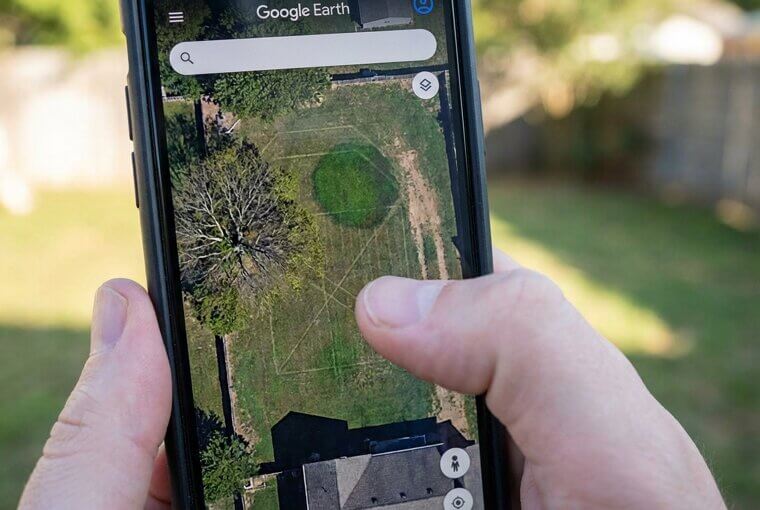
If a friend has a drone, ask them to hover over your street after a rainstorm. You'll see pooling water, erosion channels, and garden potential you've walked past a thousand times. The world has always looked different from above — and now you know exactly what to look for. Which changes everything.
You'll Never See the Ground the Same Way
Every image in this article was showing you the same truth. A shark was always circling near that sunbather. The ruins were always beneath that farmer's field. The pollution was always flowing into that river. A grandmother's homestead was always tucked in those Tennessee hills. None of it was new — it was just hidden below the surface, exactly where it had been all along. You didn't need a drone to find these things. You needed a different angle.
That's what you carry now. The awareness that the world is layered — beauty stacked on history stacked on danger stacked on wonder — all of it visible once you decide to look. You'll never see the ground the same way again.Disclaimer: This story is based on real events. However, some names, identifying details, timelines, and circumstances have been adjusted to protect the privacy of the individuals involved. The images in this article were created with AI and are illustrative only. They may include altered or fictionalized visual details for privacy and storytelling purposes